
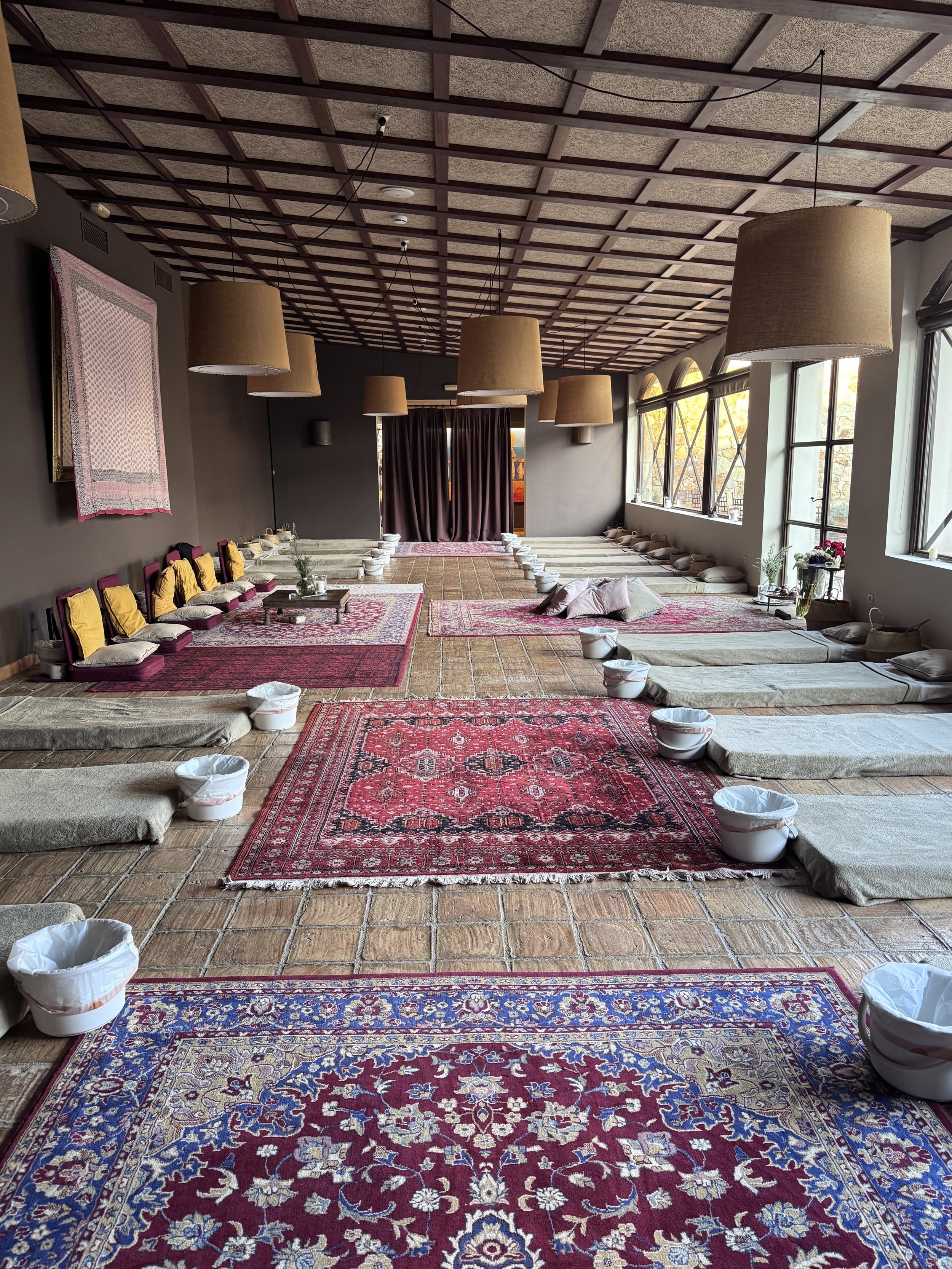
Psychedelic Integration & Meaning-Making
A reflective space for making sense of psychedelic, retreat, breathwork or altered-state experiences and integrating what emerged into ordinary life.
Psychedelic experiences can sometimes open material that is difficult to organise afterwards. This may include memories, grief, shame, spiritual insight, changes in self-perception, or a clearer awareness of patterns that have shaped your life for a long time.
For some people, the experience itself is only the beginning. The harder part can be returning to daily life and understanding what the experience means, what needs to change, what should be left alone for now, and how to stay grounded while making sense of it.
This work offers a reflective, grounded space to explore what emerged and how it connects with your body, relationships, identity, choices, habits and emotional patterns. The focus is not on chasing further experiences or turning insight into another self-improvement project. It is about making sense of what happened with care, steadiness and discernment.
My approach draws on more than fifteen years of clinical work, my background in nutrition and functional medicine, addiction support, trauma-informed practice, breathwork, postgraduate research in psychedelics and integrative mental health; and years of my own lived experience of using psychedelic work as part of healing from trauma, addiction, shame and self-protection.
Who This Is For
This may be for you if you have had a psychedelic, retreat, breathwork, ceremonial or altered-state experience and feel that something important emerged, but you are not quite sure how to make sense of it.
You may feel clearer about certain parts of your life but unsure how to translate that clarity into change. You may have touched grief, shame, anger, love, fear, spirituality or old trauma in a way that feels significant. You may also feel that the experience has left you with questions about who you are, how you have been living, what you have been carrying, or what now needs attention.
This work may also be helpful if the experience has left you feeling open, raw, confused, overly analytical, emotionally activated or unsure how to return to normal routines. Integration is not only about understanding the insight. It is also about helping the body, nervous system and daily life catch up with what has been seen.
What We Might Explore
The work is shaped around what has emerged for you, but themes may include the following:
What happened during the experience, and what feels important now.
How to separate useful insight from overwhelm, fear, projection or urgency.
The emotional material that came up, including shame, grief, anger, love, guilt, fear or self-protection.
How the experience connects with older patterns, relationships, identity, sexuality, body image or addiction.
What your body and nervous system may need after the experience.
How to support sleep, food, routine, boundaries and emotional steadiness during integration.
What changes feel genuinely aligned and what may need more time.
How to avoid making abrupt life decisions from an activated or overly open state.
How to bring insight into ordinary life through behaviour, relationships, self-care and more honest choices.
How to understand spiritual or symbolic material without forcing it into a fixed meaning too quickly.
This route may be helpful if:
You have had a psychedelic experience and want to understand what it brought up.
You are returning from a retreat, ceremony or intensive experience and need support grounding afterwards.
You have had a breathwork, meditation, somatic or spiritual experience that opened something emotionally significant.
You are trying to make sense of themes around shame, trauma, addiction, grief, identity, sexuality, spirituality, body image or self-worth.
You feel caught between wanting to honour the experience and not wanting to overinterpret it.
You have seen patterns clearly but struggle to know what to do with that insight in everyday life.
You want a grounded space that can hold both psychological and spiritual dimensions without becoming vague, inflated or overly clinical.
You are looking for support that understands the relationship between the body, the nervous system, behaviour, identity and meaning.
How Sessions Work
Sessions are reflective, spacious and practical. We start with what happened and what feels most alive now, then slowly explore the meaning, emotional themes and practical implications of the experience.
This is not therapy, and it is not a substitute for psychiatric or medical care. It is a coaching and integration space informed by trauma, functional medicine, breathwork, addiction support, body image work, lived experience and postgraduate study in psychedelics and integrative mental health.
Depending on what you need, we may focus on meaning-making, emotional processing, nervous system support, lifestyle structure, relationships, identity, behaviour change or the practical steps that help insight become more integrated.
Some people only need one session to organise an experience. Others benefit from a small number of sessions over several weeks, especially if the experience opened material connected to trauma, addiction, grief, shame, sexuality, spirituality or major life change.
Session Options
Single Integration Session, £150
A one-off reflective session for making sense of a psychedelic, retreat, breathwork or altered-state experience. This may be useful if you want to talk through what happened, identify the central themes, and leave with a clearer sense of what needs care, time or practical attention.
Four-Session Integration Package, £540
A short series of sessions for people who need more continuity after a significant experience. This may be more appropriate if the experience brought up trauma, grief, shame, addiction patterns, relationship questions, spiritual material or a deeper sense that something in your life is asking to change.
What This Is Not
Reflective Coaching is not therapy, diagnosis, crisis support, trauma treatment, clinical nutrition work, or a substitute for medical or mental health care. If you are currently in crisis, experiencing psychosis, mania, severe dissociation, suicidal thoughts, or feeling unsafe – this work is not the right first point of support. In those situations, it is important to contact a GP, mental health crisis service, therapist, psychiatrist or emergency support .
I do not provide, facilitate, prescribe, supply or refer for psychedelic substances. This is integration support for people who have already had an experience or who are processing material that has emerged through altered-state, retreat, breathwork, ceremonial or spiritual work.
What People Are Saying
Working with Daniel helped me make sense of an experience that had opened a lot more than I expected. I came into the session feeling raw, confused and unsure what to do with everything that had come up. Daniel created a space that felt grounded, intelligent and very steady. He helped me separate what felt meaningful from what felt overwhelming, and I left with a clearer sense of what needed attention in my actual life, rather than feeling I had to rush into dramatic change.
Sam, Copenhagen
Daniel has a rare ability to hold both the psychological and spiritual sides of integration without making either feel dismissed or exaggerated. I felt able to speak honestly about grief, shame, identity and some quite symbolic material from my experience, without feeling judged or pushed towards a fixed interpretation. The work helped me understand the experience in relation to my body, my relationships and old patterns of self-protection. It felt thoughtful, practical and deeply human.
Nathan, Dublin
After a retreat, I knew something important had shifted, but I did not know how to bring it back into ordinary life. My sessions with Daniel helped me slow down and understand what the experience was asking of me, without turning it into another pressure to fix myself. His background in trauma, addiction, body image and functional medicine meant the work felt grounded in real life, not abstract. I felt more able to integrate the insight through steadier choices, better boundaries and more care for my nervous system.
Ravi, Amsterdam